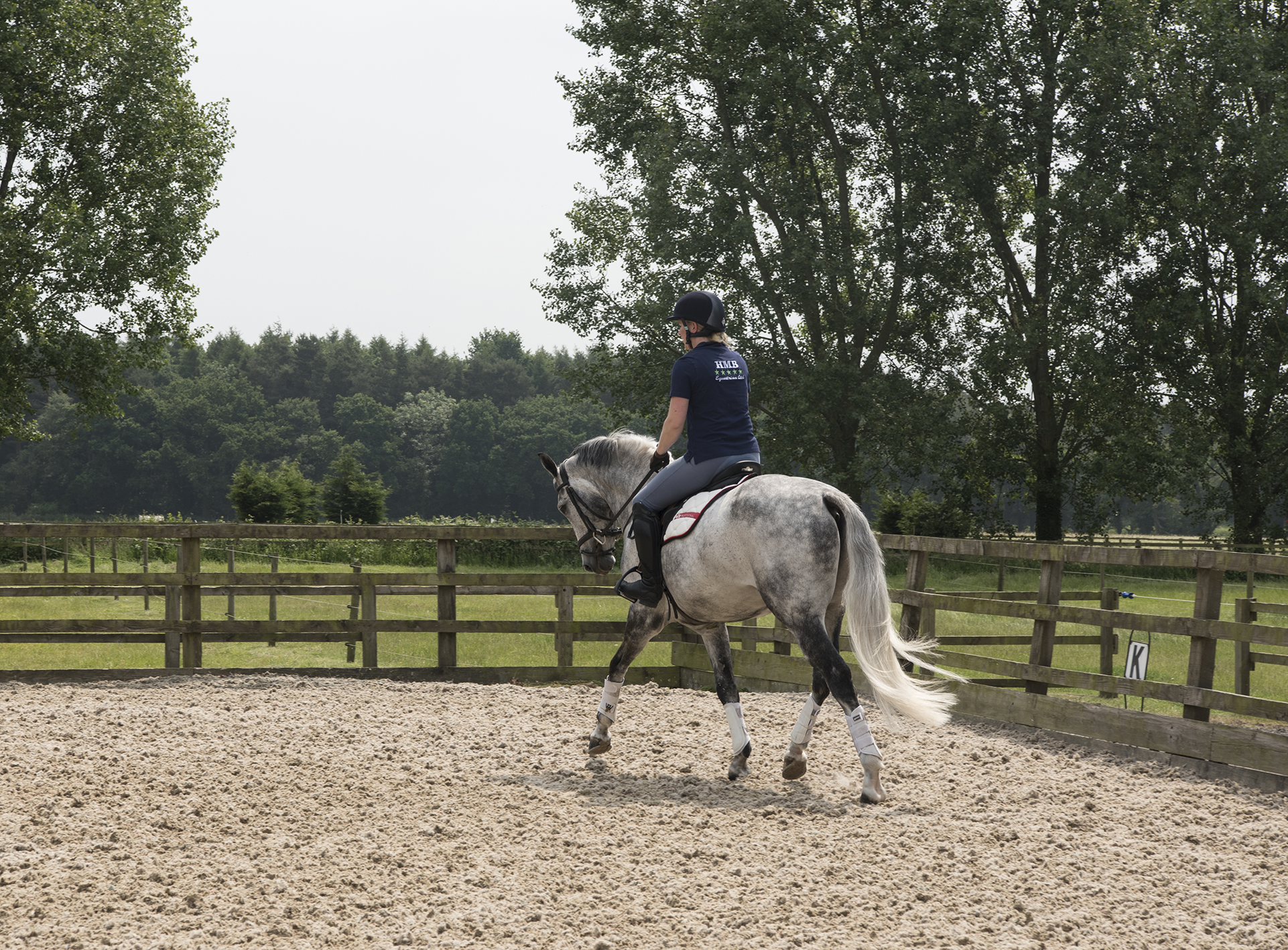
To really understand if your horse is listening to you, it is important to ask yourself two questions – are you asking correctly and is your horse responding correctly?
“Remember your horse can feel a fly land on his skin so even the smallest aid from your hand or leg should produce a response if your horse is switched on and ready to respond.” said Harriet.
How Can I Tell if My Horse is Not Listening?
There is nothing more frustrating than an unproductive schooling session. There are many different ways in which your horse will demonstrate that he is not listening.
“He will either switch off, shut down or carry on regardless,” added Harriet.
However your horse displays his lack of concentration, there are two main options to regain his attention – adjust the volume of your aid or surprise him with a transition he isn’t expecting.
Adjusting the Volume
Adjusting the volume means making your aids clearer and more obvious or making a quieter more subtle signal.
“If they don’t respond the first time of asking, you might need to ‘turn up the volume’ of your aids, this could be by using a stronger and more obvious aid or even using a touch of the whip.”
Riders that get into the habit of using their hand or leg with every stride are in danger of becoming ‘background noise’ which is also a common reason why a horse doesn’t listen to its rider, as it is unable to distinguish between the accidental aids and the actual aids.
If you have used your leg five times by accident and then the sixth time you actually meant it – how is your horse supposed to tell the difference? On the other hand, if you continue to let your real aids go unnoticed, your horse may think this is what you want as you have failed to correct him.
“Lazy horses tend to under react to aids and sharp horses tend to overreact, so the key is to adjust the volume of your aid depending upon how lazy or sharp your horse is,” explained Harriet.
“With a lazy horse use a normal volume aid first and then use a quicker, louder or more obvious aid if you do not get the desired response. Sharp horses need a slower, smaller or quieter aid first, and then the aid can get gradually louder if the desired response isn’t achieved. The volume of the response should match the volume of the request.”
Surprise Transitions
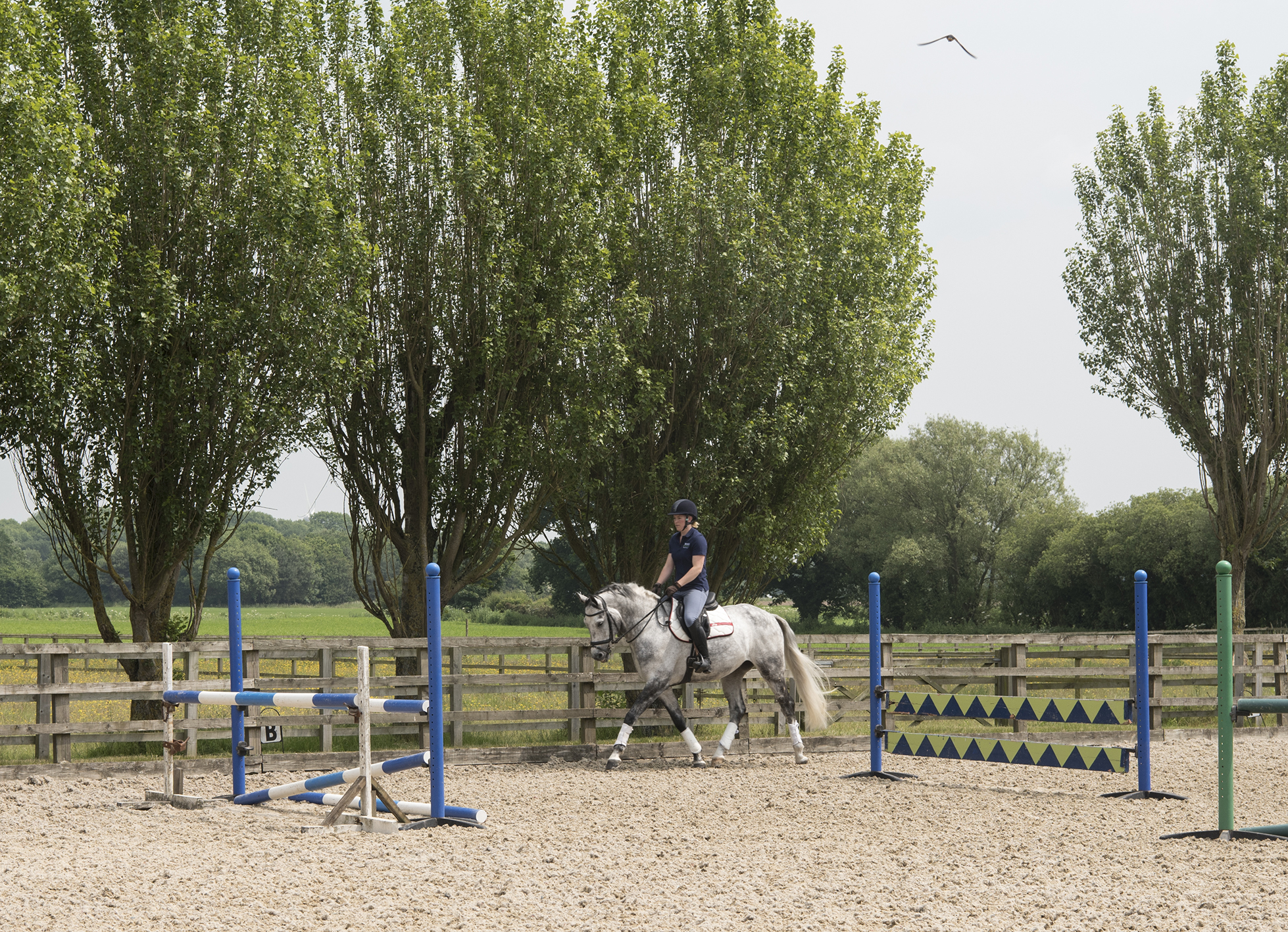
A surprise transition is where you abruptly change the pace with little or no warning. This can be an ’emergency stop’ type feeling, or it can be a sudden sprint. Surprise transitions are really good for horses that zone out or switch off, but should be used with caution on sharp or sensitive horses.
Transitions within the pace are great for judging responsiveness and for adding variety; the transitions can be obvious or subtle.
“Using transitions within the pace are a key component to my training and schooling. The more adjustable the horse is, the more control I have. Whether this is for dressage, show jumping or cross country.”
Variety is the Spice of Life
Successful schooling comes from using variety but try not to get stuck into a set routine.
Harriet recommends variety, but all still within your own training system to keep your horse focused and to make the most of your session. Try to add in some different exercises such as riding a square, serpentine, and half circles of various sizes. Mix in some lateral work too as this is really good to check the response side to side, as well as forwards and backwards.
If you tend to just go round and round the edge with only the odd circle or change of rein, changing direction every ten strides will be a shock and your horse will not know where you are going next! Ask yourself – how many strides was it since I did something different?
Change is the key to unlocking your horse’s attention, if he is not listening, ask a different question or change the way in which you request his response.
Harriet is available for dressage, show-jumping and cross-country lessons at her base near York.
To find out more call Harriet on (07795) 562745 or visit www.harriet-morris-baumber.co.uk