
- Home
- Features
- News
- Tried & Tested
- Shop

Horses are often forgotten when it comes to neglect and abandonment cases, when the public eye commonly shifts onto small animals. There is an ever increasing amount of unwanted horses being forgotten all across the country; the UK horse population is in crisis as the level of abandoned and fly-grazed horses continues to rise. As you read this article, these horses are at high risk of suffering and death as local councils and land owners struggle to cope with animals left stranded illegally on their land. It is estimated that a minimum of 7000 horses are currently deemed at risk in England and Wales. News breaking just this month of the approval of the Control of Horses Bill (England) to soon become law hopes to tackle this problem head on.
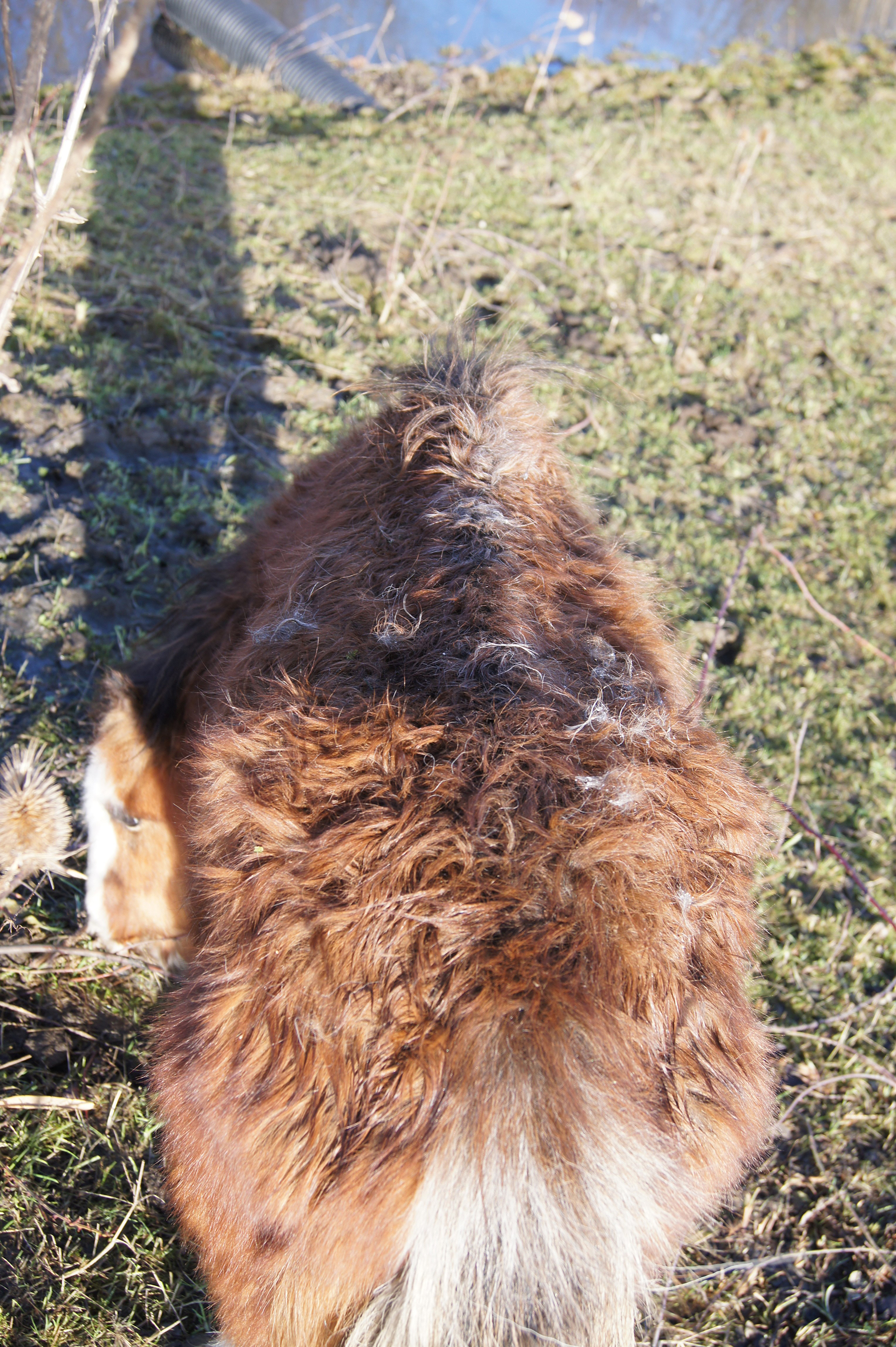
5 month old Felix found at the site of rescue. Felix was emaciated and so weak he couldn’t stand. His companion was found dead in a drainage ditch.
Redwings Horse Sanctuary, have stated that the number of welfare cases being investigated by equine welfare charities has been increasing significantly for the last 5 years and continues to rise. Redwings Horse Sanctuary is reported to be operating close to it’s maximum capacity, and in recent years the Blue Cross and the RSPCA have taken in more abandoned horses than ever before. Since 2006, World Horse Welfare have reported a 43% rise of horses being admitted to their re-homing centres.
But why are all these horses being abandoned and left to fend for themselves? The economic downturn has been named as a main component in the ever increasing amount of horses and ponies being abandoned. As people are struggling to feed their own families due to lower incomes, their animals are the first to suffer. As we know horses are expensive commodities, and unfortunately the market has become flooded with horses in need of new homes and therefore they are proving more difficult to sell on to homes that can care for them in the current economic climate. It is against the law to abandon any animal (in accordance with the Animal Welfare Act 2006 and the Animals Act 1971), and the punishment for this offence carries a potential prison sentence and a hefty fine. However this law is an insufficient deterrent and generally un-enforced, resulting in the level of abandoned horses continuing to rise.
Over breeding and the ever increasing population of horses in the UK (which is estimate to approximately a million) is also a key cause for concern. Irresponsible breeding is at the centre of the issue, in particular unscrupulous horse dealers who continue to breed and import horses, has created an ever more saturated market, resulting in many horses through no fault of their own simply unable to find a safe home. It is these horses that then become at risk of abandonment, neglect and serious welfare issues and it is more often than not the role of the equine welfare charities to step in and rescue these poor defenceless animals. In the first quarter of 2013 alone, World Horse Welfare recorded a 22% increase in welfare complaints with regards to horses and ponies.
So what is the fate of these abandoned and forgotten horses? Many sadly end up in the meat trade, as many of these abandoned horses have fraudulent passports as was highlighted by the recent ‘horsemeat scandal’. Sadly the number of horses sent for meat appears to have doubled since 2008 in the UK. The remainder of these horses, if lucky enough, end up in the care of the wonderful equine charities we have here in the UK. These are the lucky ones, but space in these centres is limited and many centres are functioning close to if not above, maximum capacity.
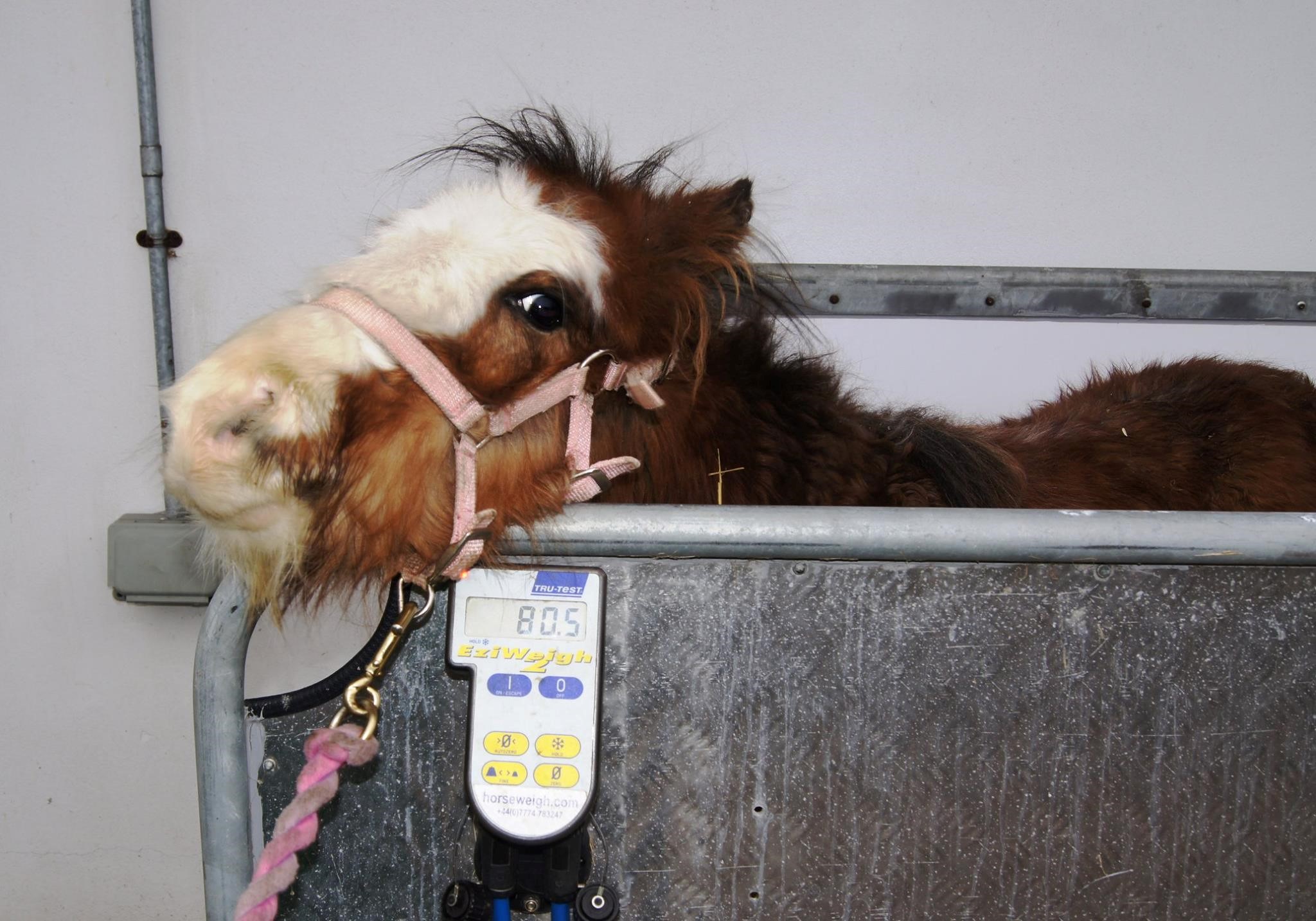
3 weeks in after staying at HorseWorld. Felix has gained 9kg since arrival taking him up to 80.5 kg
Fly-grazing is becoming of increasing concern in the UK, with many high profile welfare cases requiring the intervention of our ever stretched equine welfare charities. Fly grazing is the act of deliberately placing or abandoning equines on another persons land without consent; it is thought that there are approximately 3000 horses in England being fly-grazed. In 2012 Redwings Horse Sanctuary rescued 220 horses and ponies who were being illegally fly grazed on land at Cardiff Airport. Fly-grazing results in a range of equine welfare concerns, those being fly-grazed are at an increased risk of being in poor body condition, hunger, lice and worm infestations, general poor health.
Fly-grazing does not only impact on the health and welfare of the horse, but has knock on impacts on the land owners and general public in the surrounding areas. The lost revenue for land owners on which horses are being illegally grazed, the relocation and labour costs incurred by the local governing bodies, and the clean up operations thereafter mean that the financial impacts of fly-grazing can have lasting impacts on a community. In addition, fly-grazing poses a risk to the health of the general public, for example, fly-grazed horses may stray into the highway or onto railway tracks and cause serious accidents, and may result in public land being unusable due to a large concentration of fly-grazed horses. Although, the act of fly-grazing is illegal, the existing laws in place are not adequate enough to tackle the problem and deter any future occurrences. In response to pressure from many of the UK’s equine welfare charities, in January 2014 a new act was introduced in Wales, known as the Control of Horses Act (Wales). This new act gives Welsh authorities greater amounts of legal power to seize horses that are being grazed illegally.
In England however, the existing legislation is not strong enough to act as a deterrent for fly-grazing. In the United Kingdom, by law, all equines must have an equine passport and microchip. The equine passport was introduced by law across the United Kingdom following an European Union Directive, which aimed to protect the safety of the human food chain, and in turn prevent the introduction of equines that have been treated with specific medications (i.e Bute) being slaughtered for human consumption. However, this law is very rarely enforced, and therefore most of the horses found fly-grazed or abandoned will have no form of identification to connect them to an owner or breeder. In addition, there is currently no central database for all the equine records in the United Kingdom.
Originally the National Equine Database aimed to form a record of all the individual equines in the United Kingdom, however, the funding for this initiative was removed by DEFRA in 2012. The European Union however has approved new proposals in September 2014 to confirm that the United Kingdom must create a new central database for the information stored inside the equine passports; however how this is to be implemented is not yet decided. Currently, there is no way of tracing a horse (even if microchiped) as the a central database for storing this information does not exist. Under the current UK law, if a horse appears on your land and you cannot trace the owner, you are legally responsible for the health and welfare of this horse. Therefore, if you are a farmer, and 30 illegally fly-grazed horses appear on your land overnight, with no traceable owner, you are now responsible for these horses. This creates a massive unwarranted financial burden on the landowner, from the costs of providing food, shelter and water for these horses to the legal costs of removing the animals; this all becomes the responsibility of the land owner.
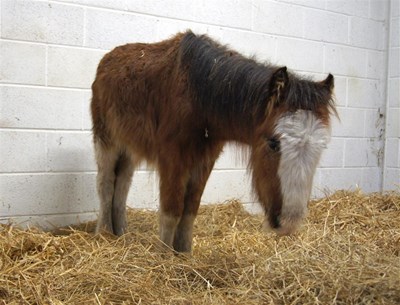
Felix in his new home
As a result of all these limitations of the current legislations in England, and off the back of the success of the Control of Horses Act (Wales), a new piece of legislation is working it’s way through the English courts. Since it’s introduction in 2014, the Control of Horses Act (Wales) has been used by more than half of all the Welsh local authorities, and in Swansea alone it has been enforced more than 175 times. These statistics alone show the necessity of this change in the law. The Control of Horses Bill (England) was proposed by MP Julian Sturdy in July 2014, and a draft bill created in September 2014.
The Control of Horses Bill (England) made it’s way successfully though it’s second reading in the House of Commons with cross party support, and in January 2015 passed it’s third reading in the House of Commons, and therefore progressed to the House of Lords. On the 12th of March 2015, the Bill made it’s way though it’s second reading in the House of Lords, and progressed to it’s third reading on the 18th of March 2015. The Bill passed this reading, and is soon to become law. The Control of Horses Bill (England) makes amendments to the Animals Act 1971, which aim to help people deal more effectively and swiftly with horses that are placed on their land illegally; the Bill covers both public and private land. The Animals Act 1971, was created in a very different economic climate for the equine industry, and therefore in it’s own title is in part not applicable to the current equine industry.
The Animals Act 1971 was created in a time when all horses had an economic value, unlike today for the reasons discussed previously, where the value of a horse is often minimal. The Animals Act 1971, currently states that once the landowner who has had the horse abandoned on his land has gone through the procedures laid out by the Act, they are able to sell the animal to regain some of the lost revenue caused by the fly-grazing. However, in the current economic climate, the landowner would be unlikely to regain any money from the abandoned horse, resulting in further suffering for the animal and an economic loss to the land owner. The main changes to the Animals Act 1971, laid out by the proposed Control of Horses Bill (England) are to speed up the rate at which a landowner can remove an illegal horse from their land, from 14 days down to 4 working days. The landowner may remove the animal from their land however they see fit (as long as the process is humane). This allows time for a responsible horse owner to claim their missing horse, and minimises the expenses incurred by the local authority and land owner.
This Bill has now (as of the 18th of March 2015) passed through it’s third reading in the House of Lords, and is ready to be awarded Royal Assent and is hoped to become law in England before the end of this month. The Bill has the potential to speed up the resolution of fly-grazing and to deter future perpetrators, and in turn reduce the level of resources required to tackle the problem. The Control of Horse Bill (England) has the potential to improve both equine health and welfare and public safety. When the Bill is made law it will decrease the financial pressures of fly-grazing and abandoned horses on the local authorities, land owners, equine charities, tax payers and police and allow horses to be better protected from the impacts of poor care and attention.
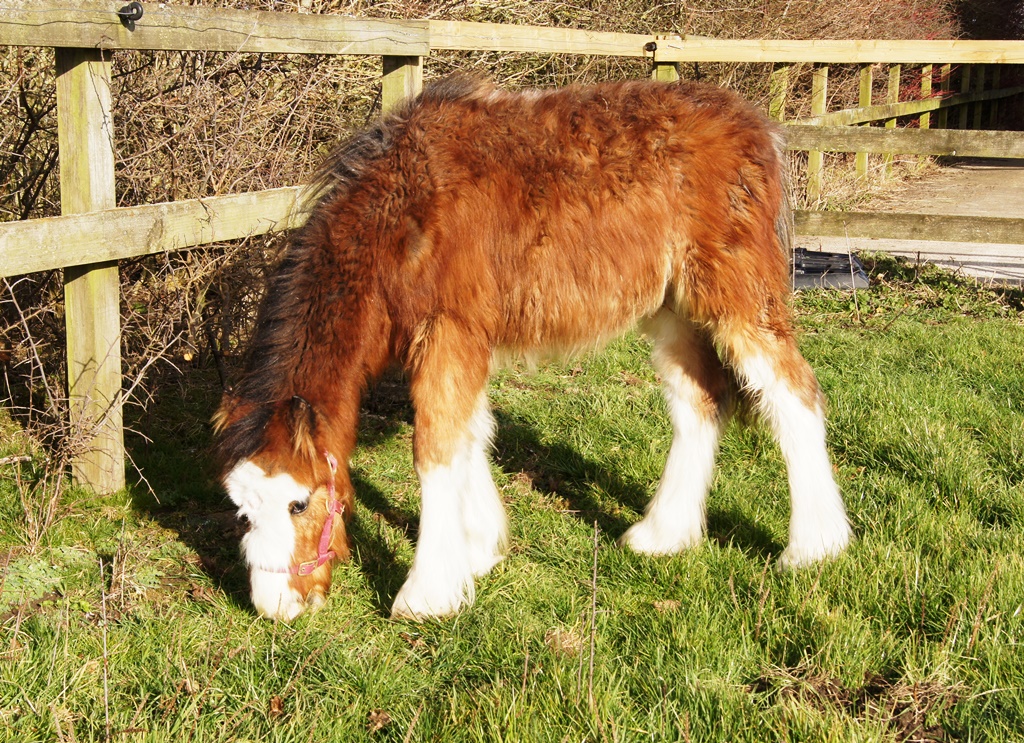
Felix’s first day out in the field since arrival at HorseWorld.
So whilst the government and the equine welfare charities fight tirelessly to change the law and improve equine health and welfare, what can you do to help? If you have the time and the commitment you can help these horses, many of the equine welfare charities in the UK offer re-homing programs so you can give one of these abandoned horses a new start in life and a bright and happy future. Re-homing a horse from a charity offers many benefits, all of the charities will re-home their horses on a loan basis so that you know if your circumstances ever change the horse will be able to return to the charity and will always be safe and out of harms way.
All of the horses will have been fully vetted and all their ability and characters assessed by professionals before they are re-homed, so you know exactly what horse you are taking home and there are no unwelcome surprises. The main plus point of re-homing an abandoned horse is that you are giving that horse his or her life back, you are becoming his or her family and best friends. These horses truly need to learn to trust and have faith in humans again and you can give all of that and more to one of these horses. And in turn, every time a horse is re-homed, it creates a free stable for another horse in need of help. Even if you are unable to provide a permanent home for an abandoned horse, why not consider volunteering at your local sanctuary? Any help with every increasing day to day chores of running this fabulous sanctuaries will go a long way to helping horses in need. Or why not consider a donation or ‘Adoption Horse’?
We hope that the plight of the abandoned horses and ponies in this country is now a little clearer, and also that we may have sparked a few ideas to re-home some of these wonderful horses and ponies in need.
Please use the links below to all of the equine charities supported by the National Equine Welfare Council. If any of your pets and animals need insurance, we recommend speaking to Animal Friends who are an ethical insurance company with strong philanthropic ties to animal welfare and have to date donated over £2 Million to over 300 different charities and this is continuing to grow.
Here’s a little video of Felix’s first day out in the field filmed on 18th March 2015 – what an amazing recovery.
The Blue Cross – www.bluecross.org.uk
Bransbury Horses Rescue and Welfare – www.bransbyhorses.co.uk
Crosskennan Lane Animal Sanctuary – www.crosskennanlane.org.uk
The Donkey Sanctuary – www.thedonkeysanctuary.org.uk/foster-faq
Greatwood – www.greatwoodcharity.org
H.A.C.K. Horse Sanctuary – www.hackhorseeducation.org.uk
Horses and Ponies Protection Association – www.happa.org.uk
HEROS (Homing Ex-Racehorses Organisation Scheme) – www.heroscharity.org/heros-horses
Horse Rescue Find – www.horserescuefund.org.uk
Isle of Wight Donkey Sanctuary – www.iwdonkey-sanctuary.com
Lluest Horse and Pony Trust – www.lluesthorseandponytrust.co.uk
Mare And Foal Sanctuary – www.mareandfoal.org
Mill House – www.millhouseanimalsanctuary.co.uk
Moorcroft Racehorse Welfare Centre – www.mrwc.org.uk
Mountains Animal Sanctuary – www.mountainsanimalsanctuary.org.uk
Devon and Horse and Pony Sanctuary – www.dhaps.org.uk
RSPCA – www.rspca.org.uk
Redwings – www.redwings.org.uk
World Horse Welfare – www.worldhorsewelfare.org
Horseworld – www.horseworld.org.uk
Thoroughbred Rehabilitation Centre – www.thoroughbredrehabilitationcentre.co.uk
Northern Counties Horse Protection Society – www.brysons.org.uk
 ‘Red Noasby’ comes to Oasby Horse Trials for Comic Relief
  Hunks and Horses 2015 Calendar
  Stan Engelbrecht
  Celebrations at the Horse Rangers Association
© 2026 The Gaitpost is published by Sarah Heseltine. All rights reserved.
