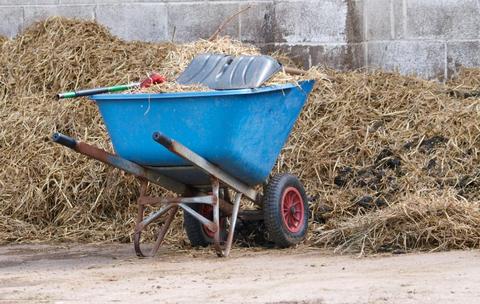
 Horses that are stabled are exposed to high concentrations of “dust” which can include mould spores, pollen, fungi, dust mites, bacteria and viruses. All of these can be a potential irritant to the airways. Another factor is that stables often don’t have the best ventilation so any dust present takes a long time to clear. Behaviour and feeding also has a major role to play in stabled horse respiratory problems. Outside when grazing pasture the horse normally spends at least 12h with its head lowered. This serves to clear inhaled dust from the airways by gravity. Combine this with the production of ammonia by bacteria from urea (the breakdown product of protein) excreted in urine and the stable environment can be quite challenging.
Unfortunately, the horse is also very bad at telling us when he has a respiratory problem. When we hear an occasional cough or see a slight nasal discharge this is often just the tip of the iceberg. Surprisingly, horses with moderate to severe respiratory disease can show NO clinical signs whatsoever, such as a cough, nasal discharge, temperature, increased lung sounds or the obvious poor performance.
So if the stable environment can have this dramatic effect on our horses health, what about the effect on human respiratory health?
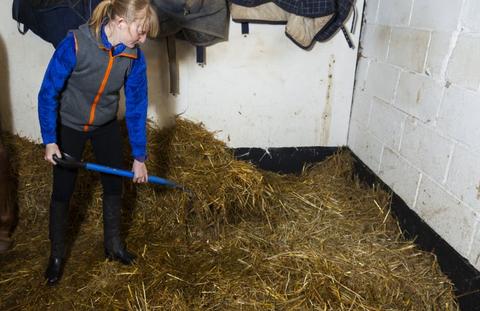 We would imagine it would be a much lower impact as riders comparatively spend a short time each day in the environment. Probably the most common human allergic lung condition is Farmer’s Lung, also known as a type of hypersensitivity pneumonitis (exaggerated allergic reaction in the lung to inhaled allergens).
In the UK, it has been estimated at a prevalence around 420-3000 per 100,000. With improved understanding of the need for good air quality and respiratory protection in recent years, the number of cases of Farmer’s Lung appears to be declining.
Exposure to large quantities of contaminated hay is the most common source of inhalational exposure for workers who develop Farmer’s Lung. A pilot study by Dr David Merlin in 2000, where he analysed 71 yard staff, found that 1 in 4 stable staff have occupationally related symptoms and 1 in 3 have abnormal small airway function.
Many different factors will determine the risk of developing respiratory problems as a result of being exposed to horses and the stable environment. These will include genetic predisposition, the amount of type of “dust” present and how many hours a day and per week the exposure is. However, it is likely that people being exposed to stables with low air quality will have an increased risk of developing chronic respiratory disease such as asthma and that this will become more apparent in the future.
For more information or to read Dr David Marlin’s full article, please visit https://haygain.co.uk/blogs/news-and-events/how-does-the-stable-environment-impact-on-human-respiratory-health.